
Flumazenil reliably reverses benzodiazepine sedation, yet most emergency physicians will go a career without giving it in an overdose. This article separates the registration trial efficacy data from the pooled adverse event evidence, sets out where the 2023 AHA focused update actually lands, and treats the question as a patient selection problem rather than a drug problem.

The commonest error with flumazenil in procedural practice is treating reversal as the response to oversedation rather than as one option among several. This guide covers the airway-first sequence, the pre-procedure history that decides eligibility, titration endpoints, agent-specific monitoring periods, and why discharge instructions have to be written down.

The pharmacy and nursing side of flumazenil: a 0.1 mg/mL solution given in two-millilitre increments, where dead space in the giving set can look exactly like a genuine non-response. Covers presentation and storage, compatibility and dilution, in-use stability, injection technique, and what needs to be in the room before the first dose.

Flumazenil’s dosing instructions are themselves a safety intervention, written to slow administration down rather than to deliver a target dose. A consolidated reference for labeled adult and pediatric regimens across conscious sedation, anesthetic reversal, and suspected overdose, with cumulative ceilings, repeat dosing, and the titration logic behind them.

Almost every practical rule about flumazenil falls out of its receptor pharmacology. This article works through competitive antagonism at the benzodiazepine site of the GABA-A receptor, why the drug reverses sedation without producing any of its own, why it does nothing for propofol or alcohol, and why seizure is the specific adverse effect of concern.

Flumazenil carries three labeled indications plus a set of off-label uses reported in the literature. This article maps where the drug is actually used in practice, from procedural sedation and anesthetic emergence through remimazolam and Z-drug reversal to hepatic encephalopathy and refractory hypersomnolence, and sets out what it has no activity against at all.

Flumazenil is a competitive benzodiazepine receptor antagonist given intravenously, with onset in 1 to 2 minutes and a terminal half-life of roughly 40 to 80 minutes. It is well established for reversing procedural sedation and anesthetic benzodiazepine effect, and far more contentious in overdose, where seizure risk in dependent patients and mixed ingestions, plus re-sedation from its short duration, drive most guideline caution.
Why Reliable Shipping Matters When Ordering Research Chemicals Like Flumazenil: Ensuring Integrity, Accuracy, and Scientific Reproducibility Overview: The Importance of Reliable Shipping for Research Chemicals In the world of scientific research, precision and consistency are paramount. When ordering sensitive compounds such as research-use-only flumazenil, ensuring the chemicals are shipped with the highest standards of care […]
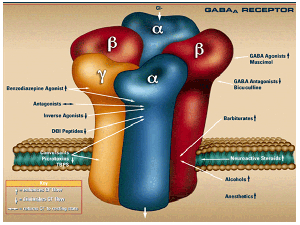
Flumazenil is a benchmark benzodiazepine antagonist used to understand what happens at GABA-A receptors when antagonists bind, especially at the benzodiazepine site. This article explains, in receptor and kinetic terms, how flumazenil and similar compounds interact with GABA-A receptors, what “antagonism” means at the level of binding and gating, and how these interactions are studied […]