Content overview: flumazenil and USP standards
This long-form article explains what the United States Pharmacopeia (USP) is, how USP standards are created, and why USP grade flumazenil is valuable in laboratory, preclinical, and receptor-level research. It focuses on flumazenil as a well-characterized benzodiazepine-site ligand used in GABA-A receptor pharmacology, not on its clinical use, and avoids therapeutic claims. The discussion covers purity, identity, and impurity control, as well as analytical method development, stability, and experimental reproducibility. Limitations and realistic expectations are highlighted so that USP grade flumazenil is seen as one important component of a broader research quality strategy. The article concludes with a concise summary and a practical FAQ section addressing common questions from scientists planning to work with flumazenil.
Introduction: flumazenil in a research context
Flumazenil is widely used in basic and preclinical research as a benzodiazepine-site ligand at the GABA-A receptor, where it typically behaves as a competitive antagonist or functionally neutral modulator. Because it is relatively well-characterized across multiple α-subunit–containing receptor assemblies, it often serves as a reference compound in studies that compare new benzodiazepine-site ligands or explore subtype-selective pharmacology. In receptor binding experiments, electrophysiological recordings, and certain imaging or tracer-development projects, flumazenil provides a stable pharmacological anchor point. The reliability of data generated with flumazenil, however, depends heavily on the quality of the material used. USP grade flumazenil, manufactured and qualified to meet pharmacopeial standards, offers a higher level of assurance regarding identity, potency, and impurity control compared with many generic research-grade preparations. For scientists focused on reproducible, well-controlled experiments, that assurance can be critical.
What is USP: United States Pharmacopeia?
USP origins and mission
The United States Pharmacopeia (USP) is an independent, scientific, nonprofit organization that develops and publishes public standards for the quality, purity, strength, and consistency of medicines and many of their ingredients. Over time, USP has evolved from a small compendium of drug recipes into a global reference for quality benchmarks that are used by manufacturers, regulators, and laboratories in many countries. Its standards are compiled in the USP–National Formulary (USP–NF), which is updated regularly to reflect advances in analytical science, manufacturing, and regulatory expectations. Although USP does not regulate products directly, many regulatory authorities adopt USP standards by reference, making them legally enforceable for marketed drugs and some related substances in their jurisdictions. For research laboratories, USP’s role is more about scientific reliability than regulatory compliance: it provides clearly defined specifications that can be used to judge whether a substance such as flumazenil meets a recognized quality baseline.
How USP standards are structured
USP standards are organized into monographs and general chapters. A monograph is a detailed specification for a particular substance, preparation, or dosage form, and typically includes tests and acceptance criteria for identity, assay (potency), impurities, and sometimes performance characteristics like dissolution. General chapters describe analytical techniques, validation principles, and other cross-cutting topics that apply to many different monographs. For a substance to be labeled as “USP” or “meets USP–NF” in an official sense, it must conform to the monograph requirements when tested according to the prescribed procedures. USP also maintains highly characterized reference standards—physical samples of specific substances that labs can purchase and use to calibrate instruments, validate methods, and compare test samples. In the context of flumazenil, this framework means that “USP grade flumazenil” is not just a marketing phrase; it implies conformance with a defined, transparent set of analytical and quality criteria.
What “USP grade” means for flumazenil
Identity and assay requirements for flumazenil
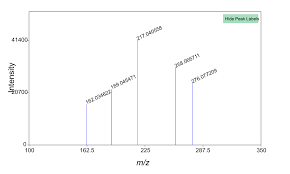
Reliable reference standards /analytical-chemistry-spotlight-why-flumazenil-is-a-preferred-reference-standard/, such as those provided by the United States Pharmacopeia (USP), are crucial in research. In a pharmacopeial setting, the identity of flumazenil is confirmed through a combination of orthogonal analytical methods, such as infrared spectroscopy, chromatographic retention time matching, and sometimes nuclear magnetic resonance or mass spectrometry. The goal is to exclude closely related impurities or analogs that might exhibit different pharmacological profiles. Assay requirements specify how much flumazenil must be present as a percentage of the labeled amount, typically within a narrow range such as 98–102 percent on an anhydrous basis. This tight range reduces uncertainty in dosing for experiments, because the nominal mass weighed out is much closer to the true amount of active substance delivered into a solution, perfusate, or formulation. When a batch is released as USP grade flumazenil, the supplier is effectively certifying that the material meets these identity and assay specifications under validated test conditions. For a researcher, that translates into greater confidence that the compound being applied to cells, tissues, or animal models is accurately described and consistently potent from one lot to the next.
Impurity limits and their impact on GABA-A research
Impurity control is one of the most important advantages of USP grade flumazenil for receptor and preclinical work. Pharmacopeial monographs typically define both specified impurities—known, structurally related compounds that can be formed during synthesis or degradation—and limits for unspecified impurities that may arise at low levels. Each potential impurity is subject to quantitative limits; for example, a total impurity ceiling, plus tighter thresholds on any single impurity. Even small amounts of certain impurities can complicate experimental results if they possess their own activity at GABA-A receptors or other targets. An impurity that behaves as a weak partial agonist or inverse modulator could, at sufficient concentration, distort dose–response relationships or alter current kinetics in electrophysiology experiments. Using flumazenil that conforms to USP-style impurity limits reduces the likelihood that such confounding effects are present at meaningful levels. This, in turn, supports clearer attribution of observed pharmacological effects to flumazenil itself rather than to unknown contaminants.
USP reference standards and comparability of flumazenil lots
USP reference standards are highly characterized materials used as benchmarks for analytical testing. When a laboratory develops or verifies an HPLC, LC–MS, or other assay for flumazenil, using a pharmacopeial reference standard allows the method to be anchored to a widely recognized material. This helps ensure that retention times, peak shapes, and calibration curves have a traceable reference point. When multiple suppliers offer flumazenil that “meets USP” or is “tested according to USP methods,” the reference standard also serves as a common denominator, enabling comparisons across lots and sources. For researchers running long-term projects or multi-site collaborations, this comparability is valuable. It makes it easier to detect genuine biological differences in GABA-A receptor responses, rather than differences stemming from uncontrolled variability in flumazenil quality.
Why USP-grade flumazenil matters in lab and preclinical research
Reducing confounding variables in receptor pharmacology
GABA-A receptor pharmacology is sensitive to relatively subtle changes in ligand profile, particularly when experiments aim to distinguish effects across specific α-subunit–containing receptors. If the flumazenil used in such work contains uncharacterized impurities, those impurities may bind to the same receptors with different intrinsic efficacies or kinetic properties. Even trace levels can influence baseline currents, shift apparent EC50 values for GABA, or alter the apparent potency of other benzodiazepine-site ligands being studied in combination. By working with USP grade flumazenil, researchers substantially reduce this source of uncertainty. The compound’s identity and impurity profile are better constrained, so when a receptor exhibits an unexpected response, the list of plausible explanations is shorter and more focused on the biology or experimental design rather than on the material itself. For experiments that will be repeated across many preparations or shared across laboratories, minimizing these confounders is essential.
Improving dosing precision and reproducibility
In preclinical models—whether in vivo, ex vivo, or organotypic—dosing precision matters. If the actual content of flumazenil in a vial deviates significantly from the labeled amount, nominal dose calculations can misrepresent the true exposure. Overestimated potency may lead to underdosing, which can obscure receptor-level effects and suggest that a pathway is less important than it truly is. Underestimated potency can produce the opposite problem, making a ligand appear more disruptive than it would be at a correctly calibrated concentration. Because USP grade flumazenil must fall within a narrow assay window, these problems are less likely. Researchers can convert between milligrams, molar concentrations, and target exposures with more confidence, especially when building dose–response curves or comparing different administration routes. Across multiple experiments and time points, this contributes to better reproducibility and more reliable interpretation of data.
Impurity control and safety in non-clinical work
Even though the focus here is on laboratory and preclinical research rather than clinical use, safety and ethical considerations remain relevant. Some impurities may have off-target toxicity, irritant properties, or reactive functional groups that complicate both the biological interpretation of experiments and the handling of substances in the lab. When using flumazenil in animal models or ex vivo tissues, for example, an impurity that affects hemodynamics or metabolism could produce changes misattributed to GABA-A modulation. USP-style impurity limits, combined with documentation from the supplier, provide a clearer picture of what is and is not present in the material. This helps experimentalists and oversight committees assess potential risks, design appropriate controls, and distinguish between on-target and off-target findings.
USP-grade flumazenil and analytical method development
Validating chromatographic and spectroscopic methods for flumazenil
Robust analytical methods are foundational for quantifying flumazenil in solutions, tissues, and formulations. When laboratories validate chromatographic or spectroscopic methods, they must demonstrate accuracy, precision, linearity, specificity, and robustness under defined conditions. Using USP grade flumazenil and, where appropriate, official reference standards offers a convenient way to satisfy these requirements. Because the chemical identity and purity are well established, any deviation from expected performance can more confidently be attributed to instrument issues, sample handling, or method parameters rather than to uncertainty about the calibrator itself. Once validated, these methods can be applied to non-pharmacopeial batches, stability samples, or experimental mixtures that include flumazenil alongside other compounds. This is especially important in complex matrices like brain homogenates, perfusates, or formulations containing excipients, where matrix effects can be significant.
Stability, degradation, and storage considerations
Another benefit of working with USP grade flumazenil is the guidance it provides on stability and storage. Pharmacopeial standards and related literature often identify key degradation pathways—such as hydrolysis or photodegradation—and suggest storage conditions that mitigate them. Researchers can use these insights to build stability studies for their own flumazenil-containing solutions or formulations, tracking the formation of known degradants over time. Starting from a material that has been well characterized for purity and stability characteristics makes it easier to differentiate degradation occurring during the experiment from impurities that were already present at the outset. In long-term or multi-phase projects, this distinction is crucial: a gradual loss of potency or the accumulating presence of a known degradant may influence receptor responses or behavioral readouts. Proper storage and regular requalification, informed by pharmacopeial guidance, help keep these factors under control.
Limitations and realistic expectations for USP-grade flumazenil
USP grade does not replace good experimental design
While USP grade flumazenil reduces one important source of uncertainty—material quality—it does not solve problems related to experimental design, statistical power, or model selection. Poorly chosen controls, inadequate sample sizes, or confounding variables in animal models can still undermine the reliability of findings. High-purity flumazenil cannot compensate for conceptual issues in hypothesis formulation or for unaccounted differences in receptor expression and localization. Researchers should view USP grade flumazenil as one element in a broader framework of good laboratory practice, not as a guarantee of valid conclusions on its own.
Cost, flexibility, and accessibility considerations
USP grade materials are often more expensive than generic research-grade alternatives, and they may not be available in all package sizes or formats that a laboratory would prefer. For early-stage, exploratory work—such as preliminary screens in heterologous expression systems—some groups may opt for high-quality research-grade flumazenil with in-house characterization rather than immediately sourcing USP grade material. There can also be logistical constraints, such as minimum order quantities or lead times. These factors encourage a tiered approach: using research-grade material where appropriate, but transitioning to USP grade flumazenil for confirmatory experiments, multi-site collaborations, or studies that are likely to inform later-stage development.
Scope of USP standards relative to research needs
USP standards are primarily designed for substances used in medicines and related health products, which means they focus on endpoints such as human safety, consistency of marketed products, and compliance with regulatory frameworks. Research contexts sometimes require attributes not emphasized in pharmacopeial specifications, such as isotopic labeling, specific salt forms, or custom formulations tailored to particular models. In these cases, it may not be feasible or necessary to obtain fully USP grade flumazenil, and researchers might instead ensure quality through internal specifications and rigorous quality control. Understanding the boundaries of what USP covers helps scientists decide when pharmacopeial standards are directly applicable and when they must supplement them with additional, research-specific criteria.
Flumazenil research applications and the value of USP alignment
GABA-A receptor and benzodiazepine-site studies with USP-grade flumazenil
In receptor-level research, flumazenil is often used as a reference antagonist or neutral comparator against which other benzodiazepine-site ligands are evaluated. Subtype-selective compounds targeting α2/α3 or α5 subunits, for example, are frequently tested alongside flumazenil in binding assays and electrophysiological recordings. Using USP grade flumazenil in these comparative studies provides a more stable baseline: observed differences in potency or efficacy profiles are less likely to reflect unrecognized variability in the flumazenil standard. This is particularly important when subtle effects are being investigated, such as small shifts in current decay kinetics or modest changes in GABA concentration-response curves. A well-defined flumazenil standard helps ensure that these nuanced observations are genuinely attributable to test compounds and receptor composition, rather than to inconsistencies in the reference ligand.
Imaging, tracer development, and formulation research involving flumazenil
Flumazenil has also been used as a scaffold for imaging agents and tracers that bind to benzodiazepine-sensitive GABA-A receptors. In these settings, the purity and characterization of the starting material can influence both the success of radiolabeling or derivatization reactions and the interpretability of in vivo or ex vivo binding data. USP grade flumazenil can provide a cleaner starting point for synthesizing tracer candidates or for preparing well-defined formulations used in distribution and binding studies. When formulating flumazenil for preclinical delivery—for instance, in specific vehicles or routes of administration—knowing that the active substance meets pharmacopeial standards helps decouple formulation effects from active-substance variability. As with receptor assays, the goal is not to make clinical claims, but to ensure that mechanistic and distribution data rest on a solid, reproducible foundation.
Summary: why USP-grade flumazenil strengthens research quality
USP grade flumazenil sits at the intersection of rigorous pharmacopeial quality standards and the practical needs of laboratory and preclinical research. By meeting defined criteria for identity, assay, and impurity control, it reduces uncertainties that can otherwise complicate interpretation of GABA-A receptor pharmacology and related mechanistic studies. Its alignment with USP reference standards supports robust analytical method development and facilitates comparability across suppliers and laboratories. At the same time, USP grade flumazenil is not a substitute for thoughtful experimental design, adequate controls, or careful model selection. Cost, availability, and the specific aims of a project all influence whether and when USP grade material is the best choice. Used strategically, however, it can play a central role in improving reproducibility and credibility in research that relies on flumazenil as a benchmark benzodiazepine-site ligand, all while remaining squarely within the realm of laboratory and preclinical science rather than medical claims.
FAQ: flumazenil and USP standards in research
What does “USP grade flumazenil” actually mean in a lab setting?
“USP grade flumazenil” typically indicates that the material has been manufactured and tested to meet the relevant pharmacopeial monograph and general chapter requirements for identity, assay, and impurities. For a laboratory, this means the compound has a documented analytical profile aligned with public standards, providing higher confidence in its composition and potency.
Is USP-grade flumazenil always necessary for GABA-A receptor research?
Not necessarily. For exploratory or low-risk experiments, high-quality research-grade flumazenil with appropriate in-house characterization may be sufficient. USP grade becomes more important when experiments require high reproducibility, when results will be compared across multiple sites, or when data may inform later stages of development where regulatory expectations are more stringent.
How is USP-grade flumazenil different from generic “research-grade” flumazenil?
The main difference lies in the transparency and rigor of the specification. USP-grade flumazenil has to meet a public, detailed monograph that defines tests and acceptance criteria, and it is traceable to pharmacopeial reference standards. Research-grade material can be high quality but often relies on supplier-specific specifications that may be less standardized or less extensively documented.
Does using USP-grade flumazenil change the regulatory status of preclinical research?
Using USP-grade flumazenil does not, by itself, change the regulatory category of a preclinical study, which is usually determined by the nature of the work, the models used, and applicable regulations. However, it can support documentation of material quality in submissions to oversight bodies or in internal quality systems, demonstrating that recognized standards have been considered.
Can laboratories access pharmacopeial reference standards related to flumazenil?
Yes. Many laboratories can purchase relevant pharmacopeial reference standards from the standards-setting organization or its authorized distributors. These materials are commonly used to validate analytical methods, calibrate instruments, and serve as benchmarks for comparing test samples, including flumazenil sourced from different manufacturers.
How should flumazenil be stored to maintain quality during research projects?
Storage recommendations depend on the specific form and supplier guidance, but typical practices for flumazenil include keeping the solid material in tightly closed, light-resistant containers at controlled temperatures and avoiding unnecessary exposure to moisture and heat. For solutions, refrigeration, protection from light, and limited storage time are common strategies. Starting with a well-characterized material, such as USP-grade flumazenil, makes it easier to design and interpret stability checks over the lifetime of a project.
References
Official USP Reference Standards: Metrology Concepts
USP Testing Specifications Master Guide
What is United States Pharmacopeia (USP)?
USP Standards Detailed Explanation
United States Pharmacopeial Convention Overview