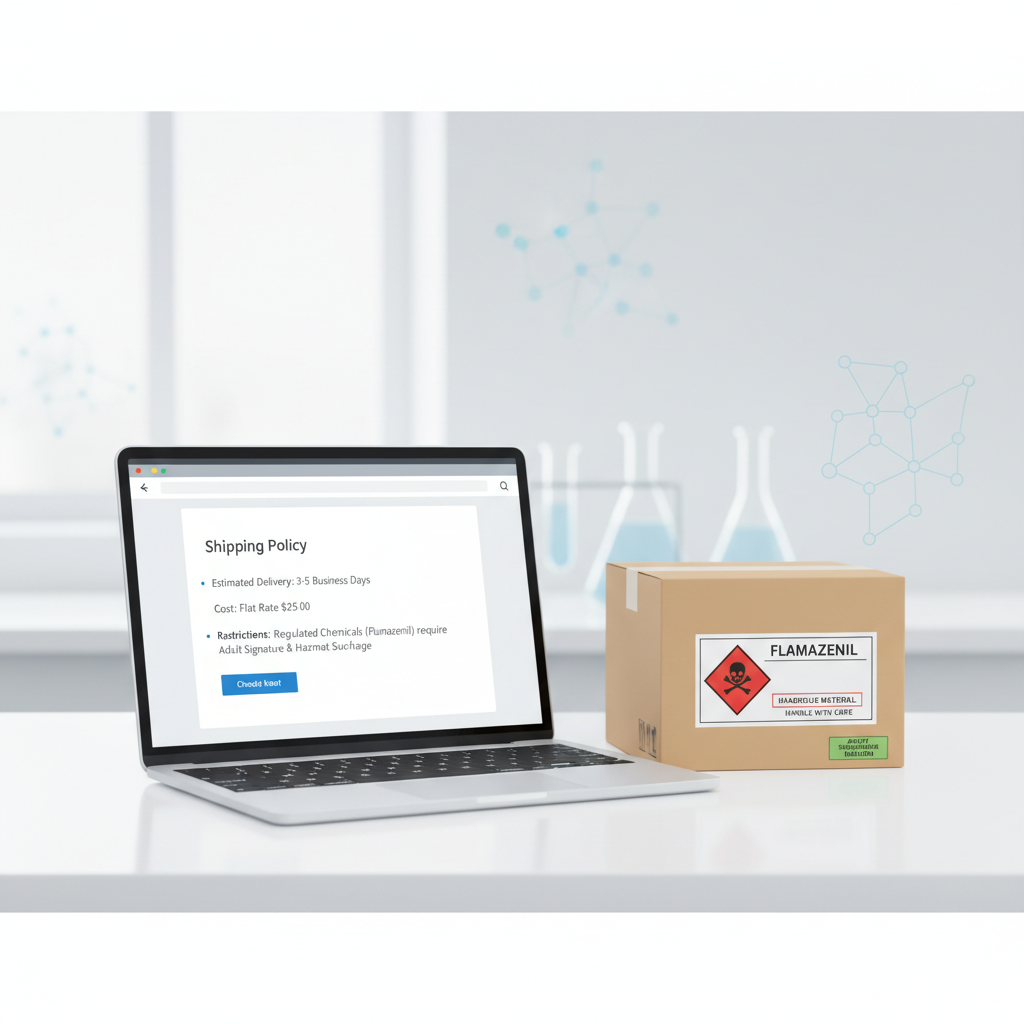
Why Reliable Shipping Matters When Ordering Research Chemicals Like Flumazenil: Ensuring Integrity, Accuracy, and Scientific Reproducibility
Overview: The Importance of Reliable Shipping for Research Chemicals
In the world of scientific research, precision and consistency are paramount. When ordering sensitive compounds such as research-use-only flumazenil, ensuring the chemicals are shipped with the highest standards of care is essential for maintaining their integrity and effectiveness.
This article explores why shipping practices should be a central consideration for research labs, universities, and institutions. It covers key aspects such as the impact of shipping conditions on chemical stability, the importance of timely delivery to avoid disrupting research projects, and the role of proper documentation for regulatory compliance.
Additionally, it discusses how predictable shipping improves laboratory efficiency, reduces variability in scientific results, and ensures reproducibility across experiments. Good shipping practices not only protect the chemical quality but also contribute to institutional trust, making it easier for researchers to plan and execute experiments without disruptions.
By focusing on best practices for shipping chemicals, this article highlights the need for secure packaging, temperature control, clear tracking, and reliable communication with suppliers to guarantee that research materials arrive in optimal condition. Ultimately, reliable shipping is integral to the success of scientific research, safeguarding the resources and time invested by researchers.
Introduction
In modern research environments, precision is everything. Whether a laboratory is conducting pharmacological studies, receptor-binding assays, imaging research, or analytical chemistry, the reliability of research materials directly affects the reliability of the results. This is especially true for sensitive compounds like research-use-only flumazenil, where purity, stability, and timing are critical factors.
While most researchers focus on the sourcing and quality of the chemical itself, one element is often overlooked but equally important: the shipping process. Shipping is not just the final logistical step — it’s an integral part of the scientific workflow. Poor shipping practices can compromise research integrity, cause experimental delays, introduce variability, and even render materials unusable.
This post explores how and why shipping quality impacts research outcomes, and why choosing a supplier with professional, transparent logistics is essential for laboratories, universities, and institutional research programs.
The Integrity of Research Chemicals Depends on Proper Transit Conditions
Many research compounds, including flumazenil, require stable conditions to maintain their chemical structure and intended activity. Shipping affects factors such as stability, potency, purity, light sensitivity, temperature exposure, and vial integrity. Even a high-purity compound can be compromised by excessive heat or cold, physical shock, broken seals, humidity exposure, or poor packaging practices during transport.
This is why reputable suppliers treat research chemicals differently from standard consumer goods. They utilize scientifically appropriate packaging, validated containment materials, and trained fulfillment staff who understand the nature of the compounds being handled. Without this level of rigor, there is no guarantee that the material arriving at your lab bench is consistent with what was tested or validated by the supplier.
For more on the importance of proper storage and handling of chemicals, see this article on chemical stability.
Time-Sensitive Research Requires Predictable Delivery
In academic and institutional settings, experiments are often scheduled around staff availability, equipment reservations, ethical approval windows, funding timelines, grant deadlines, and parallel experiments. A delayed chemical shipment can disrupt entire research cycles.
For example, in a behavioral pharmacology study requiring a series of receptor antagonists or a PET imaging protocol that depends on synchronized reagent availability, a shipment delay can mean the difference between meeting a grant deadline or missing it. Reliable shipping — especially with clear tracking, accurate ETAs, and express options — helps researchers maintain continuity and reproducibility in their workflows.
For more on time-sensitive research logistics, see this guide on research project management.
Documentation and Regulatory Compliance Depend on Proper Shipping
Research institutions must maintain strict documentation for chemicals, even when they’re used solely for laboratory purposes. Accurate and transparent shipping practices ensure proper chain of custody, correct labeling and hazard identification, accurate COAs, and clear batch information for reproducibility.
If a shipment is mishandled, mislabeled, or insufficiently documented, compliance issues can arise, even if the product itself is legitimate. This is particularly important for internationally recognized reference compounds and pharmacological agents like flumazenil, which require clear documentation and verification.
Learn more about lab safety and compliance.
Good Shipping Reduces Variability in Scientific Results
One of the cornerstones of reliable science is the ability to reproduce results. Shipping quality plays a hidden but vital role in this. Variability introduced by poor logistics can lead to inconsistent sample performance, storage condition deviations, degradation products forming during transit, batch-to-batch confusion, or irreproducible assays.
In the world of research chemicals, consistency is often as important as purity. A trusted supplier with robust shipping practices ensures each shipment behaves as expected, experiment after experiment. For a detailed look at how variability affects scientific reproducibility, check out this study on experimental reproducibility.
Tracking and Predictability Improve Laboratory Efficiency
Modern laboratories rely on planning. Staff need to know exactly when materials will arrive to coordinate experiments. Reliable suppliers provide end-to-end tracking, instant shipment notifications, proactive updates on delays, and accurate delivery windows. This allows labs to prepare procedures, allocate technician time, schedule equipment, coordinate parallel studies, and organize reagent workflows.
Researchers do not have the time — or budget — to sit waiting for untracked, unpredictable shipping. A transparent tracking system is not a convenience; it is a core part of scientific efficiency. For further insights into how tracking improves efficiency, see this article on laboratory logistics.
Institutional Purchasing Departments Prefer Suppliers With Strong Logistics
Universities and research institutions frequently evaluate suppliers on reliability, shipping accuracy, recordkeeping, packaging standards, documentation integrity, and customer support responsiveness. Labs that source compounds like flumazenil through institutional purchasing systems must demonstrate that the supplier is trustworthy and consistent.
Strong shipping operations make procurement approvals easier, smoother, and faster. To read more about institutional procurement processes, visit this helpful guide on academic purchasing.
Proper Packaging Prevents Contamination and Loss
Research labs rely on compounds that arrive sealed, clearly labeled, and packaged with secondary containment to resist temperature swings, prevent contamination, and cushion against breakage during transport. A damaged package is not merely inconvenient — it can render the contents unusable, waste resources, and compromise experimental timelines.
Quality packaging protects the financial investment laboratories make into reagents, standards, and research compounds. For more about the importance of proper chemical packaging, read this article from Lab Manager.
Shipping Reflects the Supplier’s Overall Professionalism
A supplier’s shipping practices often mirror their overall quality mindset. Suppliers who invest in secure packaging, fast dispatch times, clear communication, verified carriers, real-time tracking, proper documentation, and proactive support are typically the same suppliers who invest in high-quality sourcing, reliable synthesis, rigorous COA testing, proper storage, GMP or equivalent manufacturing controls, and scientific transparency.
In this way, shipping quality is a proxy for company reliability. If a supplier cuts corners on logistics, it’s reasonable to question whether they cut corners elsewhere. To learn more about supplier reliability, check out this article on choosing the right chemical supplier for research here.
Conclusion: Good Shipping Is a Core Component of Good Science
When ordering research chemicals — including sensitive compounds like research-use-only flumazenil — the quality of shipping directly influences experimental reliability, reagent stability, lab efficiency, institutional compliance, and overall research success. High-quality shipping is not an optional convenience; it is a foundational part of the scientific process.
Researchers and institutions that prioritize dependable suppliers with strong logistics ultimately safeguard their time, data, funding, and scientific credibility.
Read our full shipping policy here
If you’d like to learn more about the logistics behind reliable chemical shipping or need assistance with a specific order, feel free to contact us
Sure! Here’s a general FAQ section based on best practices for shipping research chemicals. It covers important topics in a fair and balanced way, not specific to any one company, but instead focusing on industry standards:
FAQ: Best Practices for Shipping Research Chemicals
1. Why is reliable shipping important when ordering research chemicals?
Reliable shipping is crucial for maintaining the integrity and stability of research chemicals. Many compounds, including sensitive chemicals like flumazenil, are affected by environmental conditions such as temperature fluctuations, humidity, and physical damage. Proper shipping practices ensure that materials arrive in optimal condition, minimizing the risk of contamination, degradation, or loss of potency.
2. What should I look for in shipping practices for research chemicals?
When ordering research chemicals, look for suppliers that offer secure packaging, temperature control (if needed), real-time tracking, and clear communication. Good suppliers will ensure that chemicals are packaged to withstand transport conditions and provide end-to-end visibility, so you know exactly where your order is at every stage.
3. How are research chemicals typically packaged for shipment?
Research chemicals are usually packaged in vial containers or sealable bags that protect them from light, air, and moisture. For temperature-sensitive chemicals, insulated boxes or dry ice may be used. Suppliers should also use secondary containment to prevent leaks and breakage during transit, and cushioning to protect the chemicals from physical impact.
4. How long does it usually take to receive research chemicals?
Shipping times vary depending on the supplier, shipping method, and destination. Typical options include standard ground shipping, which can take 3–5 business days, and expedited or express services, which may take 1–2 days for time-sensitive shipments. It’s important to check delivery estimates when placing an order to plan accordingly for your research needs.
5. Can I track my research chemical shipment?
Most suppliers provide end-to-end tracking for all shipments. Once your order is dispatched, you should receive a tracking number that allows you to monitor its progress. This is especially important for labs and research institutions that need to plan for the arrival of critical materials and adjust their schedules accordingly.
6. What happens if my shipment is delayed or damaged?
If your shipment is delayed or damaged, it’s essential to contact the supplier immediately. Reputable suppliers will have clear procedures in place to address delays and damage, which may include filing insurance claims or arranging for replacement shipments. Make sure to report any issues as soon as they are noticed to prevent delays in resolving the situation.
7. Do suppliers provide shipping insurance for research chemicals?
Many suppliers offer shipping insurance for higher-value orders. This ensures that if a package is lost, damaged, or delayed, it can be replaced or compensated for. Be sure to ask about insurance options if you’re ordering valuable or sensitive chemicals.
8. How should I handle a damaged package or missing chemicals?
In the event of a damaged package or missing chemicals, always contact the supplier immediately. You will typically need to provide details such as tracking numbers, photos of the damaged packaging or chemicals, and shipping receipts. Suppliers with good customer service will work to resolve the issue quickly, which may involve reshipping the order or providing a refund.
9. Can I request specific delivery times for my order?
While it’s not always possible to guarantee an exact delivery window, most suppliers offer express shipping or same-day dispatch options for urgent orders. If you have a time-sensitive project, it’s best to select expedited shipping and specify your preferred delivery dates during the checkout process.
10. How do I ensure my order is shipped correctly?
To ensure that your order is shipped correctly, always double-check the shipping address and confirm that the chemicals you’ve ordered are properly listed on the invoice or packing slip. It’s also helpful to check with your institution’s purchasing department for any specific shipping or documentation requirements.
11. Can I track my order internationally?
Yes, many suppliers offer international shipping with tracking information that allows you to monitor the shipment from departure to delivery. However, international shipments may experience delays due to customs clearance or other regulatory requirements. It’s important to verify that the destination country permits the import of research chemicals.
12. What should I do if the shipping address is incorrect?
If you notice an error in your shipping address after placing the order, contact the supplier immediately. Many suppliers will be able to correct the address before shipment, especially if the order hasn’t been processed yet. If the package has already been dispatched, it may be more challenging to make changes, but the supplier may be able to redirect the shipment or help recover the package.
13. What are common causes of shipping delays for research chemicals?
Delays can occur due to several factors, such as carrier issues, weather conditions, or customs processing (for international shipments). Sometimes, shipping delays can also be caused by incorrect address information, payment issues, or inventory problems at the supplier’s warehouse. Always keep an eye on tracking information and stay in touch with the supplier if any delays occur.
14. Why is it important to choose a reputable supplier for research chemicals?
Choosing a reputable supplier ensures that you receive high-quality chemicals, accurate documentation, and timely, secure shipping. Suppliers who specialize in research chemicals are more likely to understand the specific needs of laboratories and institutions, offering services like custom packaging, advanced tracking options, and proper handling of hazardous materials. Doing business with a trusted supplier also ensures that your research will not be compromised by poor logistics or inadequate product quality.
15. What are the risks of using unreliable shipping methods?
Using unreliable or untrustworthy shipping methods can lead to a host of problems, including delayed deliveries, damaged products, loss of potency, and inaccurate labeling. For research chemicals, these risks can directly affect experimental outcomes, leading to inconsistent data, wasted resources, or failed experiments. It’s always better to choose a supplier who demonstrates a commitment to safe, secure, and professional shipping practices.