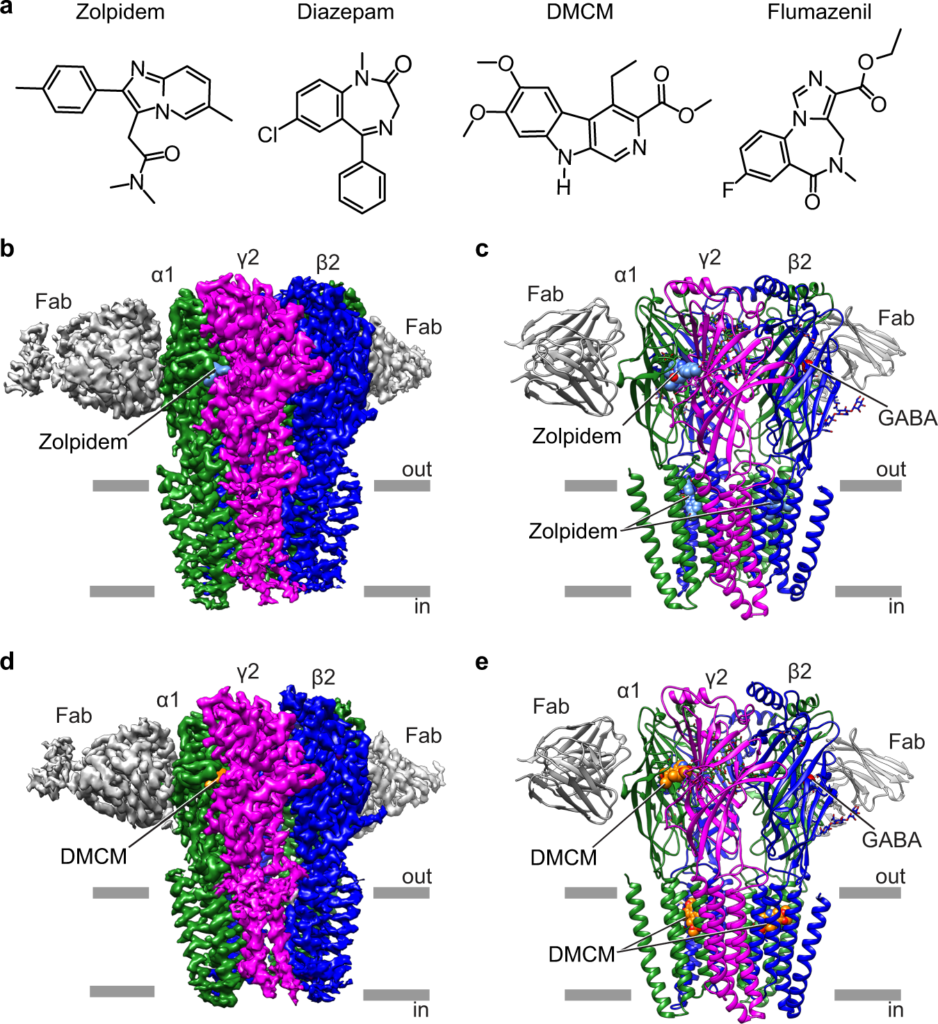
Flumazenil is a selective benzodiazepine-site ligand on GABA-A receptors, and research on its interactions with α1, α2, α3, and α5 subtypes has helped define how different receptor assemblies shape inhibitory signaling in the brain. This article explains how flumazenil binds to these subtypes, why they matter for preclinical neuropharmacology, and how subtype-selective insights guide modern receptor and synapse research.
Content overview
Introduction
GABA-A receptor architecture and subunit diversity
The benzodiazepine site and flumazenil binding
Why α1, α2, α3, and α5 GABA-A receptors matter
Flumazenil at α1-containing GABA-A receptors
Flumazenil at α2 and α3 GABA-A receptor subtypes
Flumazenil at α5-containing GABA-A receptors
Extrasynaptic and non-classical GABA-A receptors and flumazenil
Flumazenil in subtype-targeted preclinical models
Flumazenil, receptor plasticity, and long-term modulation
Structural and computational insights into flumazenil–subtype interactions
Summary
FAQ
References
Introduction
GABA-A receptors are the primary molecular mediators of fast inhibitory neurotransmission in the mammalian brain. Flumazenil, a well-characterized imidazobenzodiazepine, binds with high affinity to the benzodiazepine recognition site on a subset of these receptors and is widely used in basic and preclinical research as a reference ligand and functional antagonist.
One of the reasons flumazenil remains central in neuropharmacology is that its interaction depends strongly on receptor subunit composition, particularly on which α subunit is present alongside β and γ subunits. Among the many possible GABA-A subtypes, receptors containing α1, α2, α3, or α5 with γ2 form the core benzodiazepine-sensitive population that flumazenil efficiently recognizes. Understanding how flumazenil interacts with each of these subtypes helps clarify both the molecular pharmacology of GABA-A receptors and the design of subtype-selective experimental ligands.
GABA-A receptor architecture and subunit diversity
GABA-A receptors are heteropentameric chloride channels usually assembled from two α, two β, and one γ (or occasionally δ or other) subunits. Multiple genes encode each subunit class, leading to a large family of receptor isoforms with distinct brain distributions, kinetic properties, and pharmacological profiles.
α subunits play a pivotal role in determining benzodiazepine pharmacology. Classical benzodiazepine binding requires specific histidine residues in α1, α2, α3, and α5, whereas α4 and α6 contain an arginine at the corresponding position, which abolishes classical benzodiazepine binding. As a result, receptors containing α1, α2, α3, or α5 together with γ2 are generally benzodiazepine-sensitive, while α4- or α6-containing receptors are usually insensitive at the classical benzodiazepine site.
The benzodiazepine site and flumazenil binding
The benzodiazepine site is located at the extracellular interface between an α subunit (α1, α2, α3, or α5) and a γ2 subunit. This site is allosteric: ligands binding there modulate the effect of GABA at the orthosteric binding sites located between α and β subunits, rather than opening the channel directly.
Flumazenil binds competitively to this benzodiazepine site. In many preparations, it displays minimal intrinsic activity, acting mainly as a neutral antagonist that blocks the effects of positive modulators (like diazepam) and inverse agonists (such as certain β-carbolines). In some recombinant systems and specific subunit combinations, flumazenil can show modest negative modulation, indicating that its functional profile is context-dependent even though it remains a reliable high-affinity binder.
Why α1, α2, α3, and α5 GABA-A receptors matter
The four benzodiazepine-sensitive α subunits have distinct expression patterns and functional roles:
α1-containing receptors are highly expressed in cortex, thalamus, and cerebellum and contribute substantially to fast inhibitory synaptic currents.
α2-containing receptors are prominent in limbic circuits and spinal cord and have been linked in preclinical work to anxiolytic-like and antinociceptive pathways.
α3-containing receptors are found in brainstem and limbic areas and contribute to network modulation in those regions.
α5-containing receptors are enriched in hippocampus and are often localized extrasynaptically, where they support tonic inhibition and influence plasticity-related processes.
Flumazenil binds to all four of these benzodiazepine-sensitive subtypes, but subtle differences in affinity, efficacy, and coupling can influence how antagonism manifests in different circuits. This subtype perspective helps explain why flumazenil is such a versatile probe for dissecting inhibitory pathways in preclinical studies.
Flumazenil at α1-containing GABA-A receptors
α1β2γ2 is considered the prototypical benzodiazepine-sensitive GABA-A receptor, widely expressed in forebrain and cerebellum. Many classical benzodiazepine agonists have high affinity for α1-containing receptors, and α1 has been heavily studied in relation to sedation-like and fast inhibitory responses in animal models.
Flumazenil binds with high affinity to α1β2γ2 receptors at the benzodiazepine site and competitively antagonizes benzodiazepine-induced potentiation of GABA-evoked currents in electrophysiological recordings. In slice and cell-based experiments, application of flumazenil reverses increases in inhibitory postsynaptic current amplitude or decay time produced by α1-preferring benzodiazepine agonists, making it the standard tool for confirming α1-mediated benzodiazepine-site effects.
Flumazenil at α2- and α3-containing GABA-A receptor subtypes
α2- and α3-containing GABA-A receptors contribute prominently to inhibitory control in limbic, spinal, and brainstem circuits. Preclinical genetic and pharmacological studies suggest that α2 and α3 subtypes participate in pathways related to anxiety-like and nociceptive modulation in animal models, although such interpretations remain confined to research contexts.
Flumazenil binds to α2βγ2 and α3βγ2 receptors at the same benzodiazepine site characterized for α1, with somewhat different affinity and coupling profiles depending on the exact β and γ partners and experimental conditions. When benzodiazepine-site agonists that show relative preference for α2 or α3 are tested in electrophysiological or behavioral paradigms, co-application of flumazenil typically attenuates or abolishes their effects. This makes flumazenil a valuable pharmacological control for confirming that observed phenomena arise from α2/α3 benzodiazepine-site modulation rather than from off-target or non–GABA-A mechanisms.
In recombinant receptor systems, flumazenil has also been used to probe coupling efficiency between the benzodiazepine site and the GABA site across α1–α3 subtypes. Comparing how flumazenil shifts concentration–response curves for different agonists in α1-, α2-, or α3-containing receptors helps define subtype-specific allosteric pathways and provides a foundation for designing ligands with selective functional profiles.
Flumazenil at α5-containing GABA-A receptors
α5-containing GABA-A receptors are enriched in hippocampus and are often localized extrasynaptically, where they contribute to tonic inhibition. Preclinical studies implicate α5-mediated tonic currents in processes such as network excitability and plasticity-related signaling, again within the confines of experimental models.
Flumazenil binds to α5βγ2 receptors and can antagonize benzodiazepine modulation at these sites. Because α5-containing receptors frequently show slower kinetics and extrasynaptic positioning, flumazenil’s effects can involve changes in tonic rather than purely phasic inhibition when α5-selective modulators are present. In experimental designs where α5-preferring ligands are used, flumazenil serves as a tool to confirm that changes in tonic current or synaptic integration are indeed mediated via the α5 benzodiazepine site.
Radioligand binding and imaging work also highlight α5-containing receptors as a component of the overall flumazenil binding signal in hippocampal and cortical areas. Although α1 often dominates total binding in many regions, α5 contributes significantly to the distribution of benzodiazepine sites in hippocampus, making flumazenil-based approaches informative for studying α5-rich inhibitory microcircuits.
Extrasynaptic and non-classical GABA-A receptors and flumazenil
Not all GABA-A receptors are classical benzodiazepine-sensitive αxβyγ2 assemblies. Extrasynaptic receptors containing α4 or α6 with δ subunits support tonic inhibition and are generally insensitive to typical benzodiazepine-site ligands because of critical differences in the α subunit sequence. Flumazenil has very low affinity at these non-classical receptors, and in many cases shows negligible modulation at concentrations commonly used in experiments.
However, research has examined whether benzodiazepine-site ligands, including flumazenil, have indirect or context-dependent effects on non-classical receptor populations. Some work suggests that prolonged exposure to flumazenil can influence the surface expression of certain GABA-A receptor combinations by altering internalization dynamics or trafficking, even when direct binding at the classical benzodiazepine site is absent or minimal. These findings point to the importance of considering network-level and trafficking-related consequences when interpreting long-term flumazenil exposure in cell and animal models.
Flumazenil in subtype-targeted preclinical models
A major strength of flumazenil in modern receptor research is its use alongside genetic models that manipulate individual GABA-A receptor subunits. Knock-in mice with point mutations that render specific α subunits benzodiazepine-insensitive, or knock-out models lacking particular α subunits altogether, allow researchers to parse the contributions of α1, α2, α3, and α5 to flumazenil-sensitive mechanisms.
In these models, flumazenil helps answer questions such as: which α subunit is required for a given benzodiazepine-site effect; how loss or mutation of a particular α subunit changes overall benzodiazepine-site binding; and how network-level inhibitory properties differ when specific subtypes are altered. Because flumazenil competes at the classical benzodiazepine site across α1, α2, α3, and α5 subtypes, changes in flumazenil binding or antagonism can reveal how the distribution and function of these subtypes have shifted in genetically modified animals. Subtype-selective pharmacological tools have also emerged, and flumazenil often serves as the common reference ligand against which these newer compounds are benchmarked. When a ligand shows apparent selectivity for α2 or α3 over α1 in recombinant systems, researchers typically test whether flumazenil can still displace it from the benzodiazepine site and whether flumazenil reverses its functional effects in electrophysiology. In this way, flumazenil anchors subtype-selective pharmacology to a consistent reference across studies and laboratories.
Flumazenil, receptor plasticity, and long-term modulation
Beyond acute antagonism, flumazenil participates in research on GABA-A receptor plasticity and long-term modulation. Experiments examining prolonged exposure to benzodiazepine-site ligands—whether agonists, inverse agonists, or antagonists—often use flumazenil as a probe to separate short-term allosteric effects from slower changes in receptor trafficking or expression.
Some studies investigating chronic treatment with flumazenil or flumazenil analogues report alterations in benzodiazepine binding site density or surface expression of particular receptor configurations. For example, in certain cell systems, flumazenil exposure has been associated with changes in the internalization rates of receptors containing specific α subunits. These findings underscore that even compounds classed as antagonists can influence receptor plasticity over longer timescales, particularly when receptor trafficking, synthesis, and degradation are considered.
At the network level, flumazenil is used to interrogate how persistent benzodiazepine-site modulation reshapes inhibitory circuits. By blocking or challenging benzodiazepine-site activity at defined time points in chronic treatment paradigms, researchers can infer how α1-, α2-, α3-, and α5-containing receptors contribute to adaptive changes in inhibitory synaptic strength and connectivity.
Structural and computational insights into flumazenil–subtype interactions
Recent advances in structural biology have provided high-resolution views of GABA-A receptors bound to benzodiazepine-site ligands, including flumazenil. Cryo-electron microscopy and crystallography, combined with computational modeling, have mapped the binding pocket at the α/γ interface and visualized how different α subunits shape the local environment around flumazenil.
These structures reveal that conserved residues in α1, α2, α3, and α5 form key hydrogen bonds and π–π stacking interactions with flumazenil’s imidazobenzodiazepine core, while subtle differences in side chain orientation and pocket flexibility among subtypes can influence affinity and coupling. Molecular dynamics simulations build on this by exploring how flumazenil stabilizes particular receptor conformations and how changes in α subunit composition or point mutations alter the ensemble of states accessible to the receptor.
Such structural and computational insights support rational design of new ligands that either mimic flumazenil’s binding mode (for neutral antagonists) or intentionally modify it to favor positive or negative modulation at specific subtypes. They also help interpret subtype-specific pharmacology observed in recombinant and native systems, connecting macroscopic functional data to atomic-scale interactions.
Summary
Flumazenil occupies a unique position in GABA-A receptor research because it binds across the core benzodiazepine-sensitive α1, α2, α3, and α5 subtypes while usually behaving as a competitive antagonist. This combination of broad subtype coverage and relatively neutral functional profile makes flumazenil a powerful reference ligand for dissecting benzodiazepine-site pharmacology in basic and preclinical studies.
α1-, α2-, α3-, and α5-containing GABA-A receptors differ in anatomical distribution, kinetic properties, and contributions to network function, and research with flumazenil has been essential for clarifying these differences. Electrophysiological, genetic, structural, and imaging approaches consistently rely on flumazenil to confirm benzodiazepine-site involvement, benchmark subtype-selective ligands, and explore receptor plasticity and trafficking.
As structural biology and computational modeling continue to refine understanding of flumazenil binding at each subtype, and as new subtype-specific modulators are developed, flumazenil remains the central comparator that ties these findings together. Its role is not to make medical claims, but to provide a scientifically rigorous handle on how benzodiazepine-sensitive GABA-A receptor subtypes contribute to inhibitory signaling and its modulation in laboratory and preclinical research.
FAQ
What is flumazenil’s main role in GABA-A receptor research?
Flumazenil serves primarily as a high-affinity benzodiazepine-site ligand and functional antagonist used to confirm whether effects in a given experiment are mediated by benzodiazepine-sensitive GABA-A receptors. It anchors binding assays, electrophysiological recordings, and imaging studies by providing a consistent reference for benzodiazepine-site pharmacology.
Why do α1, α2, α3, and α5 GABA-A receptor subtypes matter for flumazenil?
These four α subunits, when combined with γ2, form the classical benzodiazepine-sensitive GABA-A receptors. Flumazenil binds at the benzodiazepine site formed at the α/γ interface on these subtypes. Their differing brain distributions and functional roles mean that flumazenil’s actions can vary across circuits, making subtype context crucial for interpreting results.
Does flumazenil bind to all GABA-A receptors?
No. Flumazenil mainly binds to receptors containing α1, α2, α3, or α5 with γ2. Receptors that contain α4 or α6 with δ subunits at extrasynaptic sites typically lack the classical benzodiazepine binding histidine and show little or no affinity for flumazenil at the benzodiazepine site.
Is flumazenil always a neutral antagonist at these subtypes?
In many native systems, flumazenil behaves functionally as a neutral competitive antagonist, blocking both positive and negative benzodiazepine modulators without large changes in baseline GABA responses. However, recombinant receptor studies show that its intrinsic activity can vary slightly with subunit composition and experimental conditions, leading to weak negative modulation in some contexts.
How is flumazenil used in subtype-specific genetic models?
In knock-in or knock-out animals where particular α subunits are altered, flumazenil helps reveal which subtypes contribute to benzodiazepine-site binding and modulation.